


The Oranje-Nassau Trail – from Gilze to Baarle-Nassau
By Charlotte Michielsen
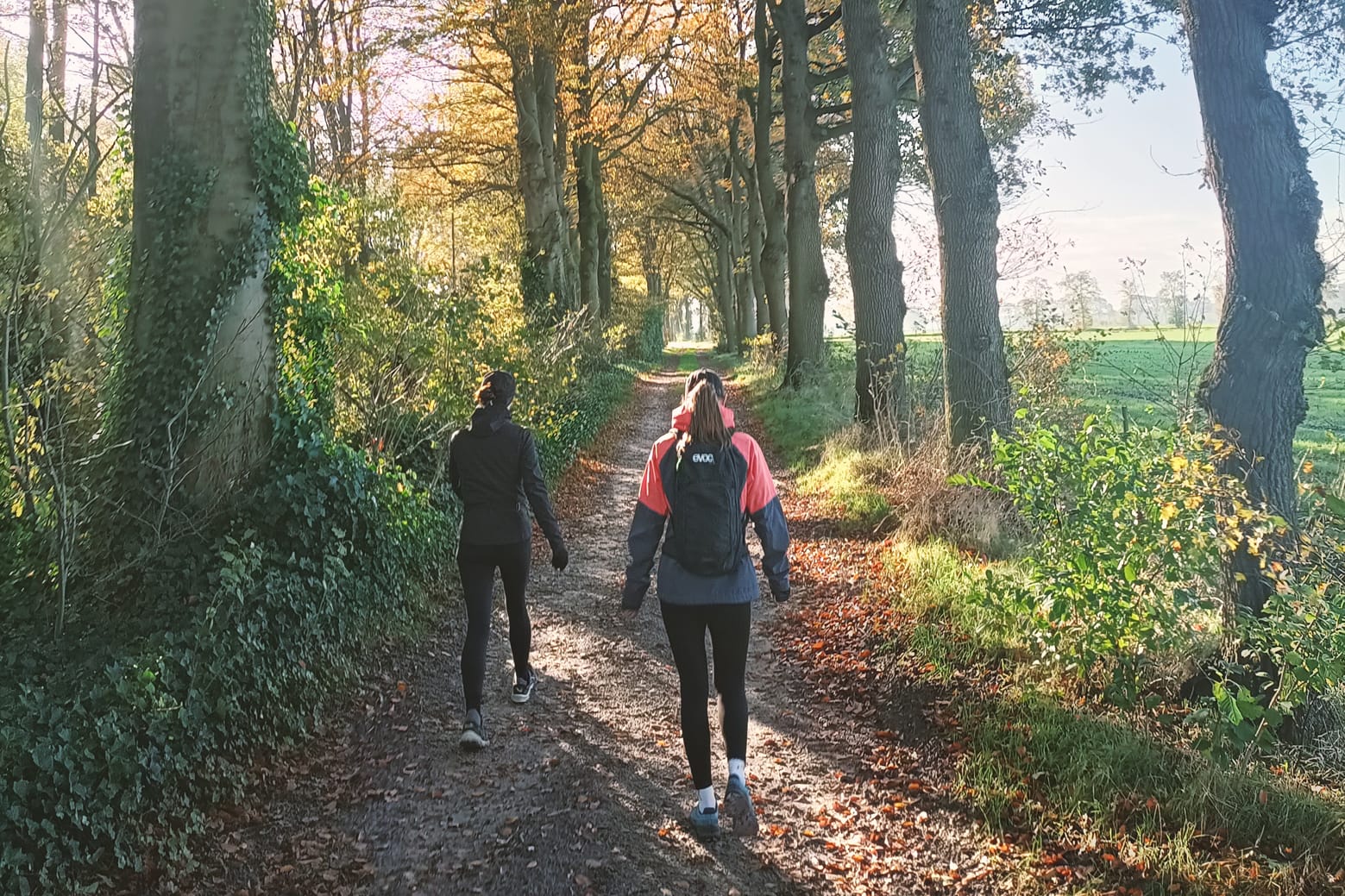
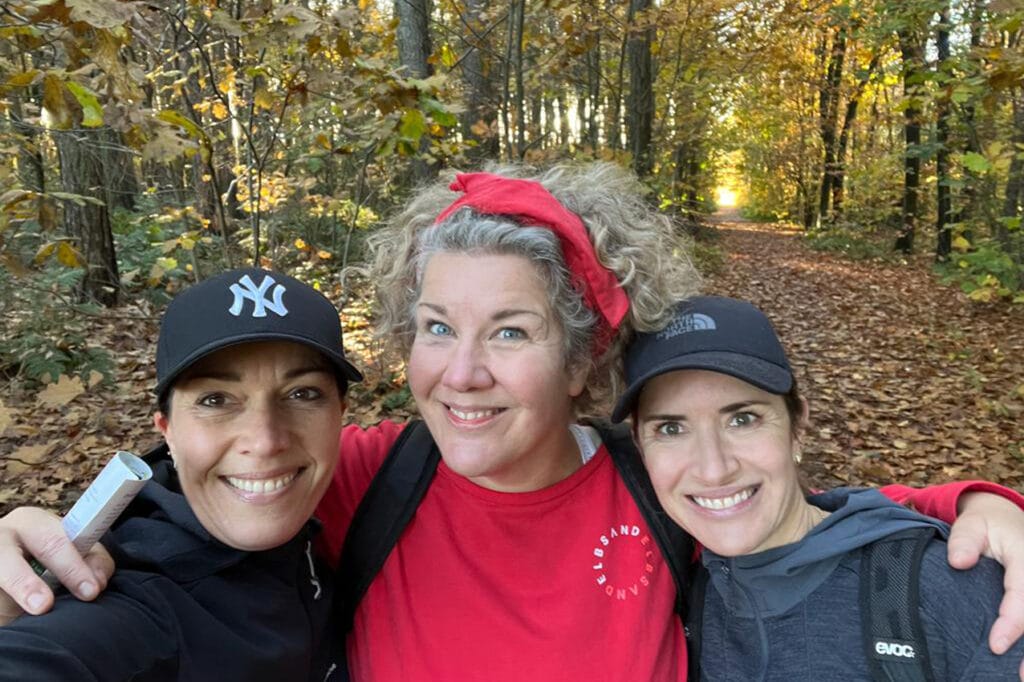
A hectic job, teenage kids and a packed diary… quality time with friends sometimes really does fall by the wayside. I felt that had to change. So a few weeks ago, I suggested we go for a walk together. It’s the perfect way to catch up. And, not unimportantly, it’s healthy too and suitable for our bodies which, as we approach 50, are getting a bit rusty. So we’re setting off. Not just any old stroll, though. No, we’ve chosen the Oranje-Nassau Trail: a multi-day walking route, divided into eight stages of around 20 km. Every month we walk one stage and finish with a well-deserved lunch. We catch up, feel a sense of connection and enjoy the beautiful countryside as it passes us by. A win-win for everyone!
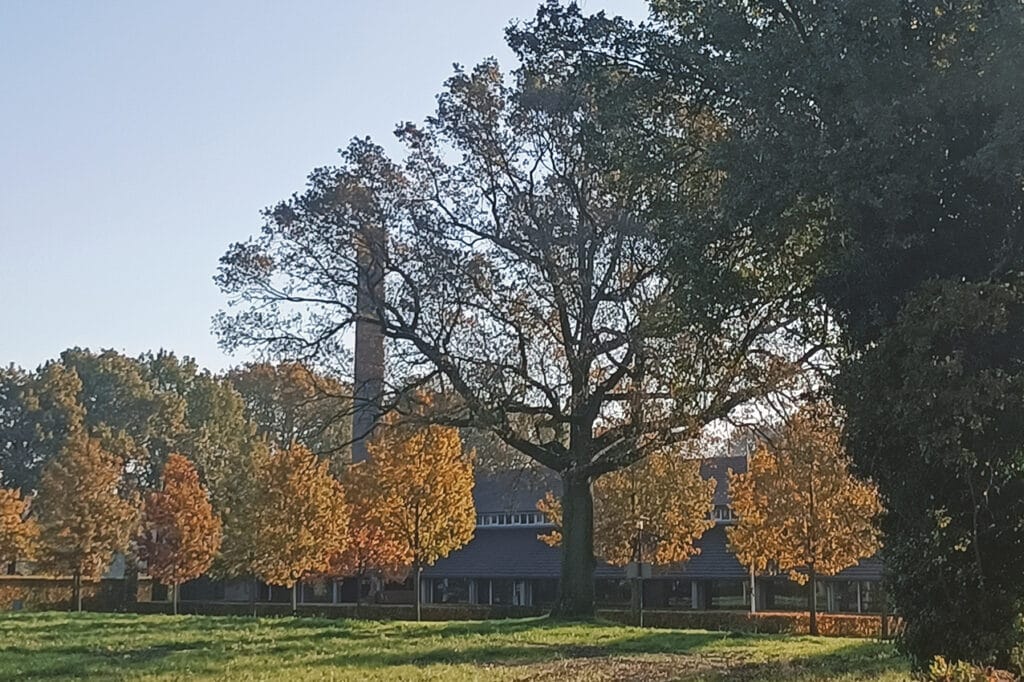
The ‘Gilzer Brick’
Following the success of ourfirst stage, we’re raring to go again today: under a clear blue sky, with the sun shining on our faces, we’re walking from Gilze to Baarle, where our roots lie. In high spirits, we set off from where we left off last time: at the church in Gilze. First, we light a candle and say a little Hail Mary for a safe journey: we’ll need it with 22 km ahead of us! We soon leave the village behind via Kerkstraat. After a few kilometres, the unpaved footpath takes us to the Steenfabriek: the first industrial enterprise in Gilze. From 1890 to 1991, the famous ‘Gilzersteen’ was produced here. After years of decline, this complex was fortunately repurposed in 2004: today it looks magnificent once again, with homes and offices.
On the way to Maastricht
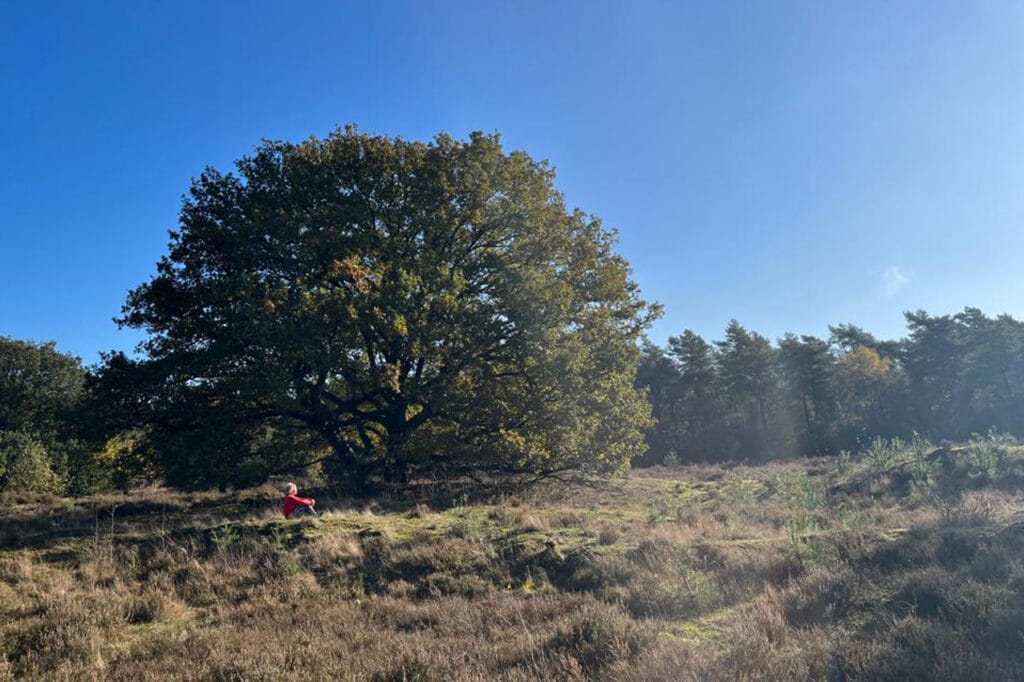
We continue along the route via the Leemkuilen, where clay was once quarried for the brickworks. Unfortunately, we soon have to swap this lovely path for a rather dull farm track. However, the fact that the landscape on this stretch of the route isn’t particularly exciting doesn’t bother us. We’re walking at a brisk pace and chatting away. Among other things, we’re discussing our beauty secrets for staying attractive as women approaching 50. Does it work? We’re still hoping so! Before we realise it, we’re suddenly in the woods of Chaam. Via the Maastrichtsebaan – which in the Middle Ages was a main road for (trade) travellers heading to Maastricht – we walk towards the Alphense Bossen. We’re feeling peckish. Luckily, there’s a bench where we can take a short break. With a view of the prehistoric burial mounds and a stunning oak tree.
Alphense Bergen
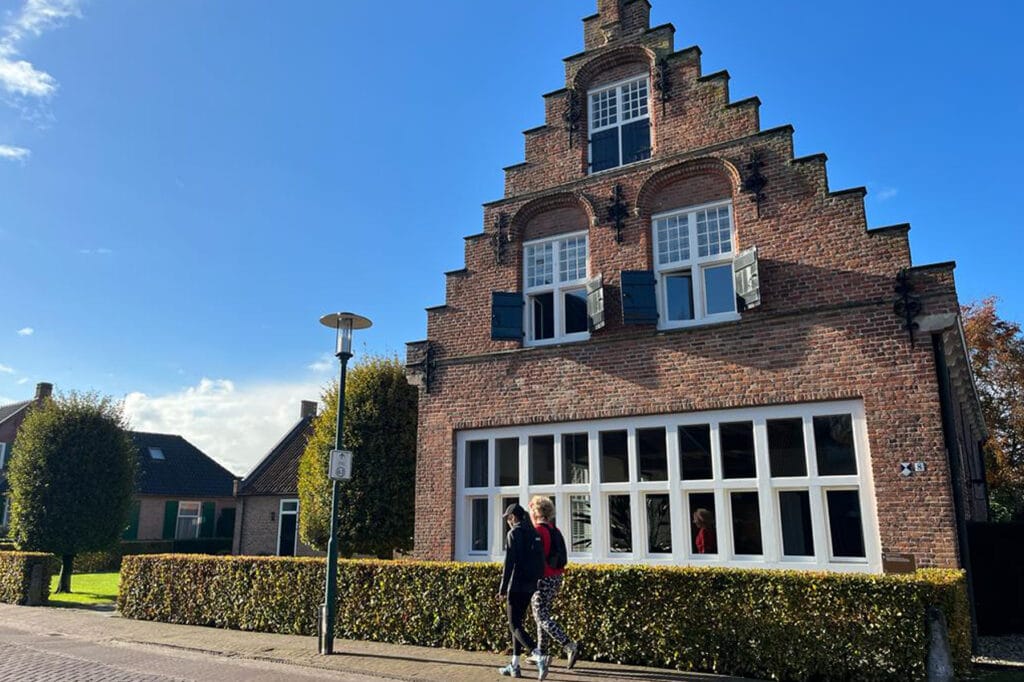
We won’t make it to Maastricht, but we will reach Alphen. We walk into the village via the recreational lake and the ‘t Zand residential estate. We’re in the mood for a cuppa, so we stop at De Kloostertuin in Alphen on W. Binckplein – a lovely, authentic little village square. At the neighbouring regional theatre, the poster reveals that there’s a varied programme on offer this month. We decide to go and see a show soon. After our coffee, we walk back into the woods via the Hofstade. This area is popularly known as ‘the Alphense Bergen’. Fortunately, there are no calf-busters; we keep up a brisk pace and just can’t stop chatting. Thankfully, we don’t forget to enjoy the beautiful autumn colours and walk through the falling leaves towards the Kwaalburg.
The Goordonk
Here we leave the woods behind and find ourselves back in agricultural countryside, where fields and meadows alternate with small copses and hedgerows. It’s lovely to walk through open countryside again and feel the sun on our faces. Via the Ulicotensebaan, which is sometimes unpaved, we reach a path running alongside the Strijbeeksche Beek. We follow this little stream for a while before crossing the busy Bredaseweg. We enter familiar territory and walk into Goordonk via the Fransebaan. We walk round the ‘Visvijver’: a former sand quarry filled with rainwater and groundwater, where fishing enthusiasts cast their lines every day and walkers enjoy this beautiful water feature set amongst the greenery.
Border village of Baarle
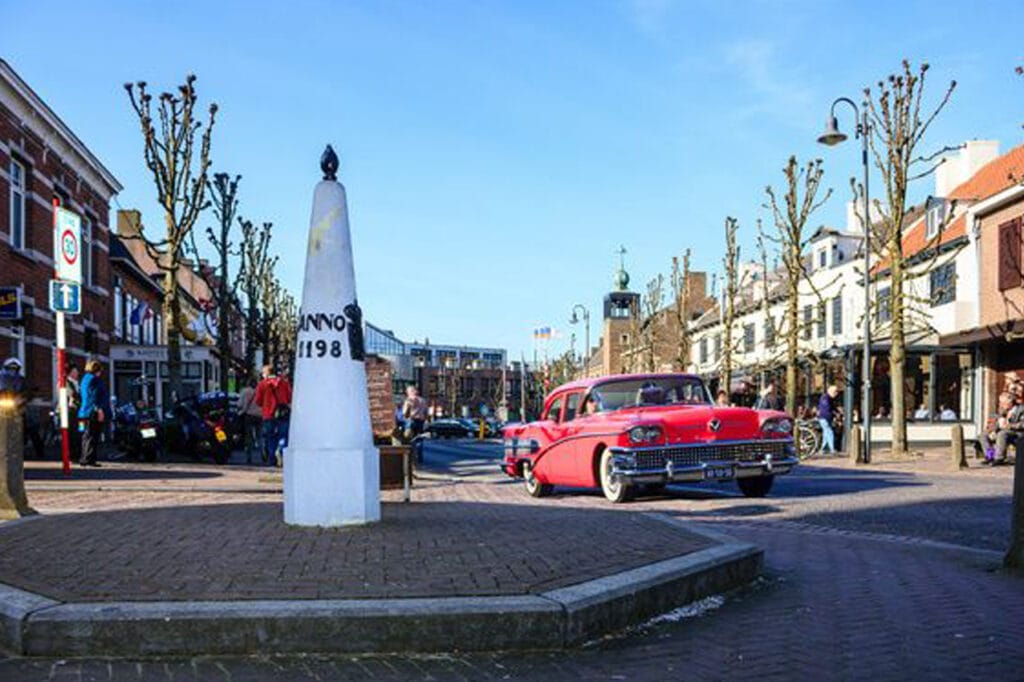
By now, our hips are stiff and we’re feeling peckish. Fortunately, we’re walking into our familiar Baarle. A unique enclave village where two nationalities have been living together in harmony, hand in hand, for decades. And where the border, cheap petrol and fireworks hold an unparalleled appeal for tourists. At the boundary post in front of the ‘Belse’ church (yes, there’s a Dutch church too), a coachload of Japanese tourists are taking a selfie. And us? We settle down on the Singel, where the many outdoor cafés mark the lively centre of this special village. And we raise a toast to yet another successful stage. Home is where the heart is!
Fancy going for a walk too?
Charlotte walked stage 2 of The Orange-Nassau Path, a 22-kilometre route from Gilze to Baarle-Nassau. The entire trail has eight stages and covers 136 kilometres.
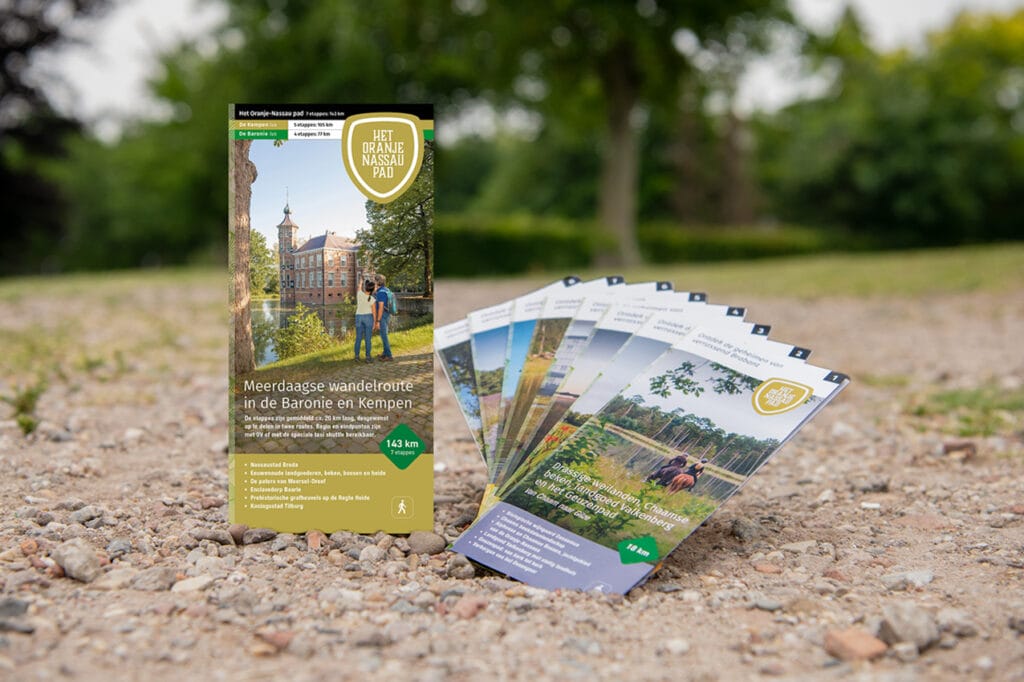
You will find useful descriptions and maps in the route guide of het Oranje-Nassaupad. It is available at the Wandelshop of wandel.nl, at the information points in the region and at Thuis Hapers in Gilze. You follow the hiking nodes via the green-yellow directions on posts and fences.
Staying longer in de Baronie?
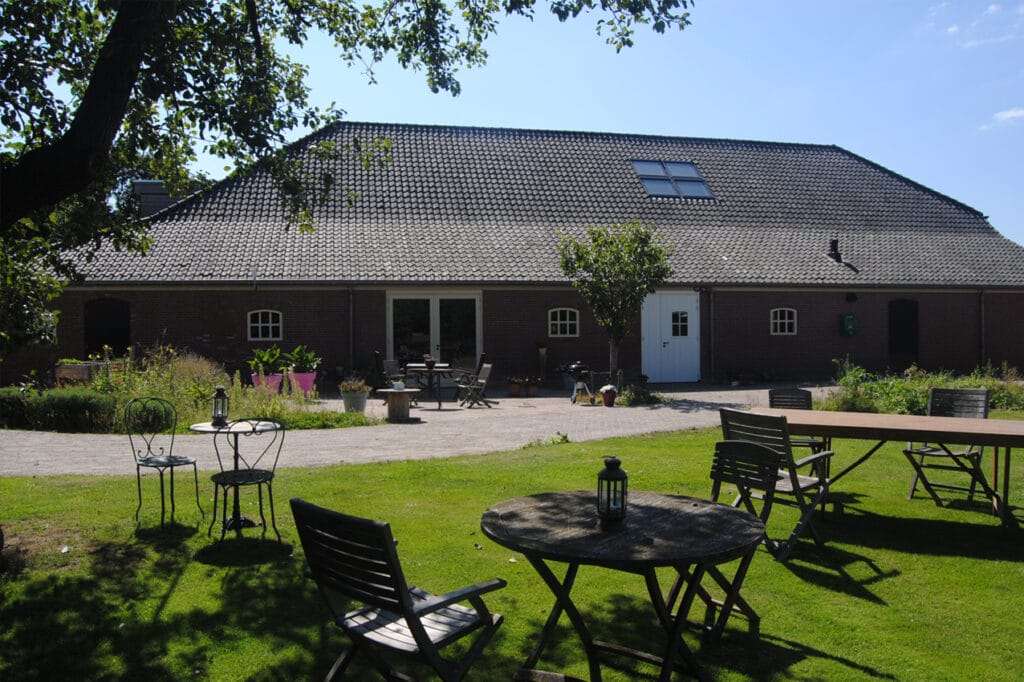
Stay overnight and enjoy this beautiful and diverse region for even longer. In De Baronie, you’ll find a wide choice of welcoming places to stay, whether for a single night or a longer break. Will you choose a cosy bed and breakfast, a luxury hotel, or would you prefer to go camping? It’s all possible here. Our accommodation options are equipped with all modern conveniences – take a look at the overview. Enjoy your stay in De Baronie.
Tips
– Wear waterproof walking boots
– Download the route on the Sporenzoeker app. It’s a really useful aid where the junction markers aren’t always clear. Please note: the access code is on the inside cover of the walking guide, which you can purchase.
– Plan a few dates in advance for the stages you’ll be walking together. That way, everyone stays motivated.