



The brickworks, dating from 1890, was in operation for over a hundred years. Millions of bricks came out of the kilns until the works closed in 1991. The building subsequently fell into disrepair. In the low-lying meadows, you can still see where large quantities of loam were excavated to produce the bricks. People used to go ice-skating on the loam pits that were created as a result. The sandy track with trees in the distance is called De Leemkuilen. In 2004, the old factory site was redeveloped whilst retaining its original architectural features: homes, offices and a public space for cultural activities. Since its opening in 2006, art exhibitions have been held in the brickworks, which is a listed building.
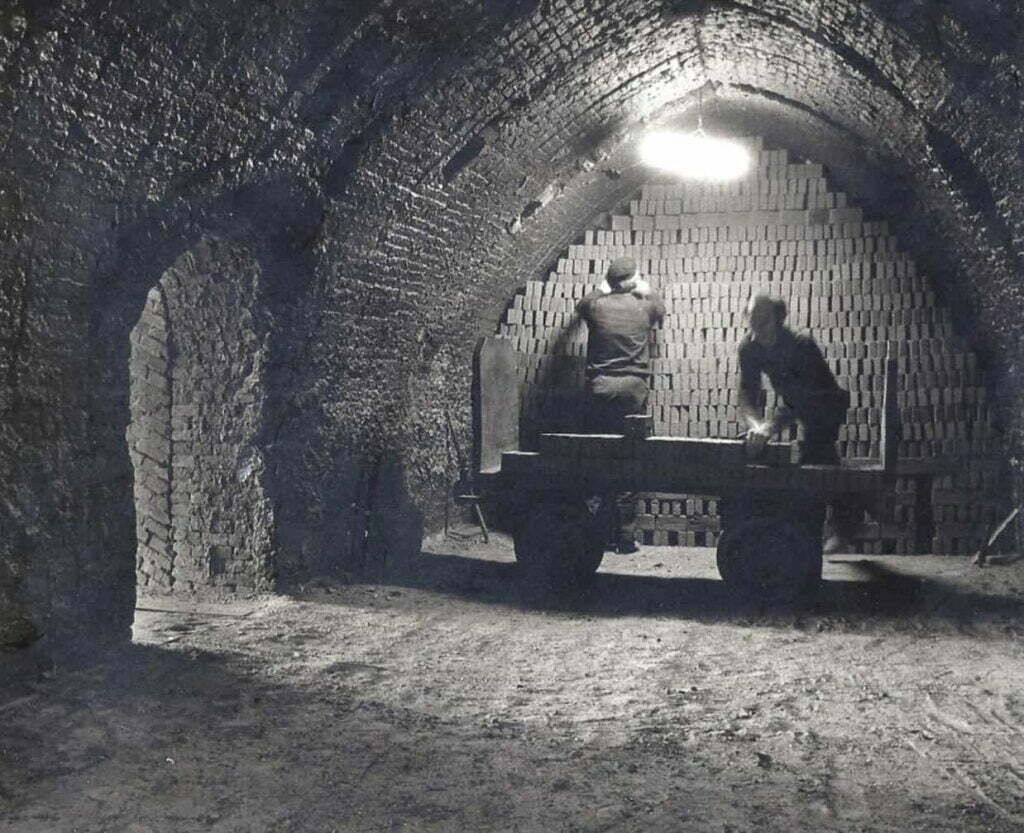
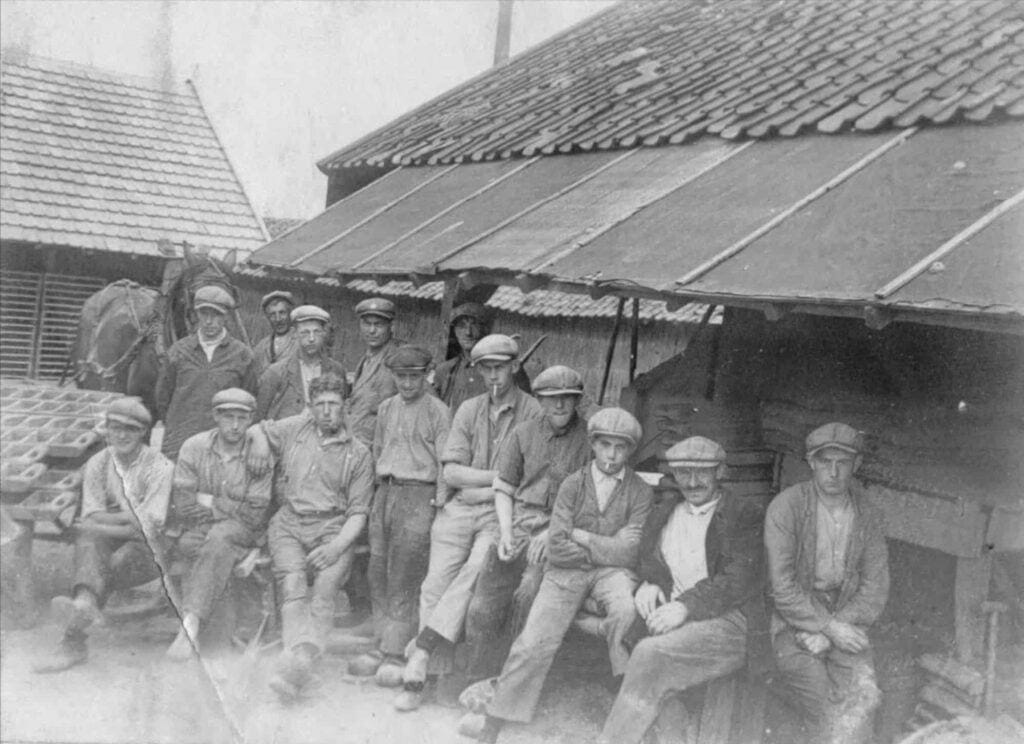
Photos: Heemkring Molenheide archive

A woodland area covering over 1,300 hectares, stretching from Alphen to Breda. It was planted by the State in the early 1900s as a production forest for industrial timber and for the mines in Limburg. Now, the ‘pine forest’ is being enriched with deciduous trees. Nature conservation and biodiversity are the top priorities here.
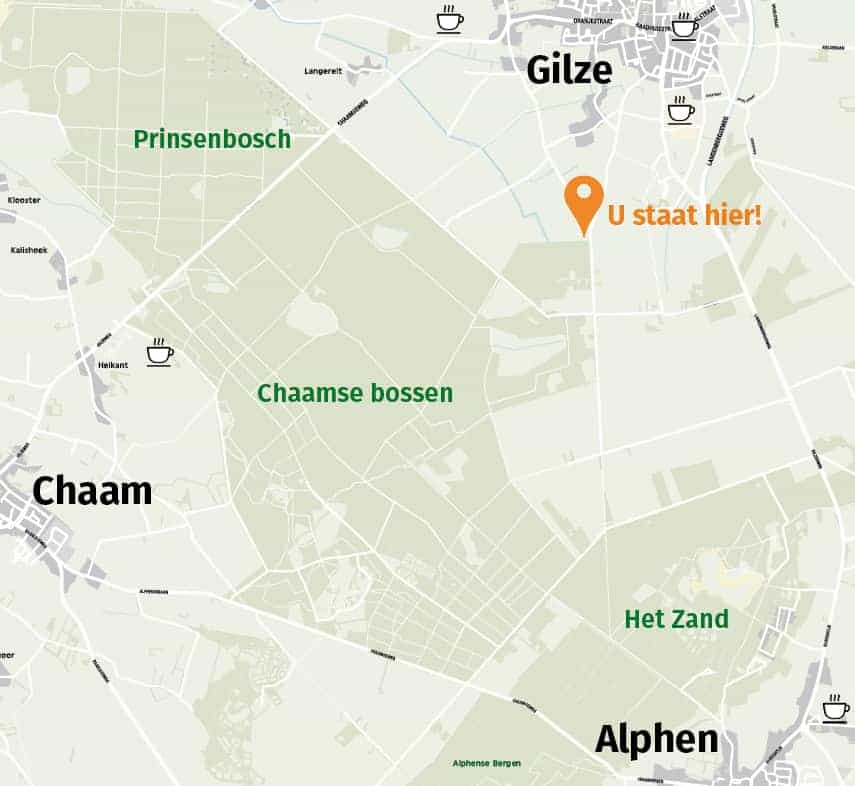
With your back to the brickworks, look westwards and you’ll see open farmland. This is where the Gilzewouwerbeek spring. This originally meandering stream carries the water towards Breda, which lies some 20 metres lower. In the vicinity of Bavel, the stream has been restored to its former glory and meanders once more. Hopefully, this will happen here too. Incidentally, ‘wouwers’ were pools teeming with fish, as the water could not drain away through the loamy soil.
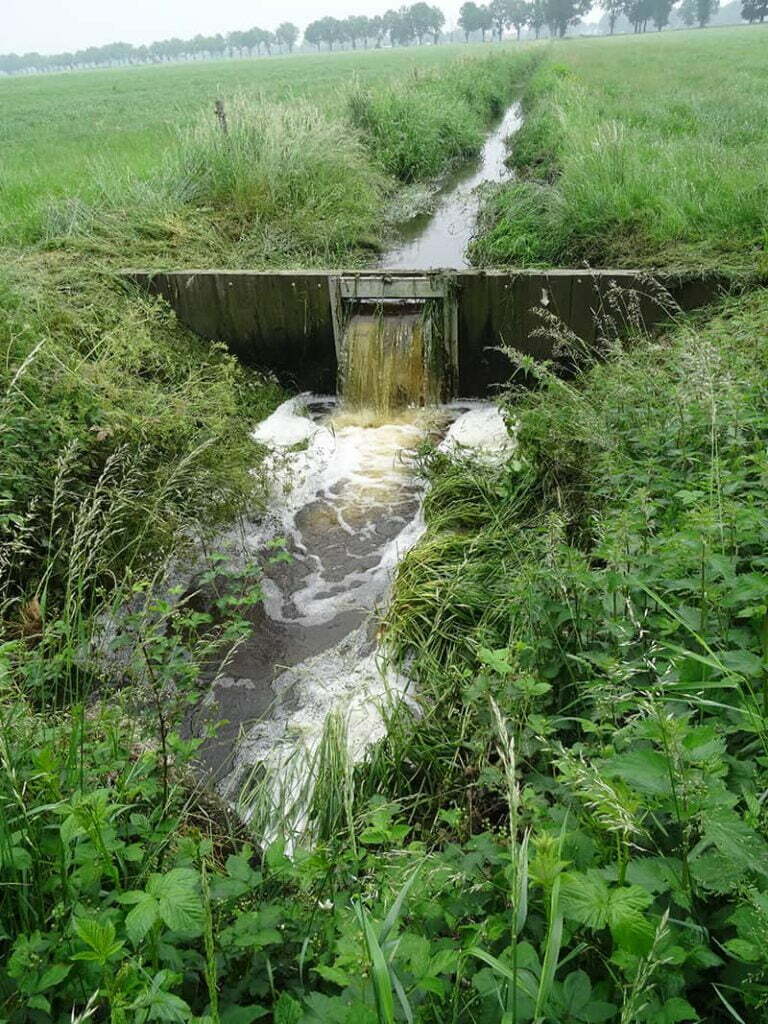
Photo: Will van Riel (NLGR – Gilze and Rijen Nature and Landscape Association)

In 1957, the Ministry of Defence built the Buitenveld complex in this patch of woodland on Alphensebaan to store spare aircraft parts. After it was cleared in 1992, the area was squatted and served as a haven for artists for fifteen years. Since 2007, it has once again been managed by Staatsbosbeheer; the buildings have been demolished and the area has been returned to nature, with exotic garden plants and bamboo serving as relics of the artistic free state.
Source: www.tijdmachinegilzerijen.nl of Heemkring Molenheide
 Eating and drinking in the neighbourhood
 Fun tips in the area
Information on this page was made possible by Heemkring Molenheide, Natuur- en Landschapsvereniging Gilze en Rijen (NLGR) and the municipality of Gilze en Rijen.
