


The painting 'Philip William of Orange and Breda' depicts the brothers of Nassau: Philip William, Maurice, Frederick with their cousins Willem Lodewijk and Ernst Casimir. Source: (Paleis Het Loo, Apeldoorn, on loan from Geschiedkundige Vereniging Oranje-Nassau.)
The story of how Brabant got Nassau roots begins in 1403. That's when the German count Engelbrecht I of Nassau-Dillenburg married Johanna van Polanen, the daughter of the Lord of Breda Jan III van Polanen. They settled in Breda. This marriage brought de Baronie of Breda into the hands of the Nassaus and the name 'van Nassau' into the Dutch royal house. In 1544, as a branch of the house of Nassau, the house of Orange-Nassau came into being. William I, Count of Nassau-Dillenburg, better known as William of Orange or William the Silent, then inherited the southern French principality of Orange. This made him Prince William and progenitor of the house of Orange-Nassau.
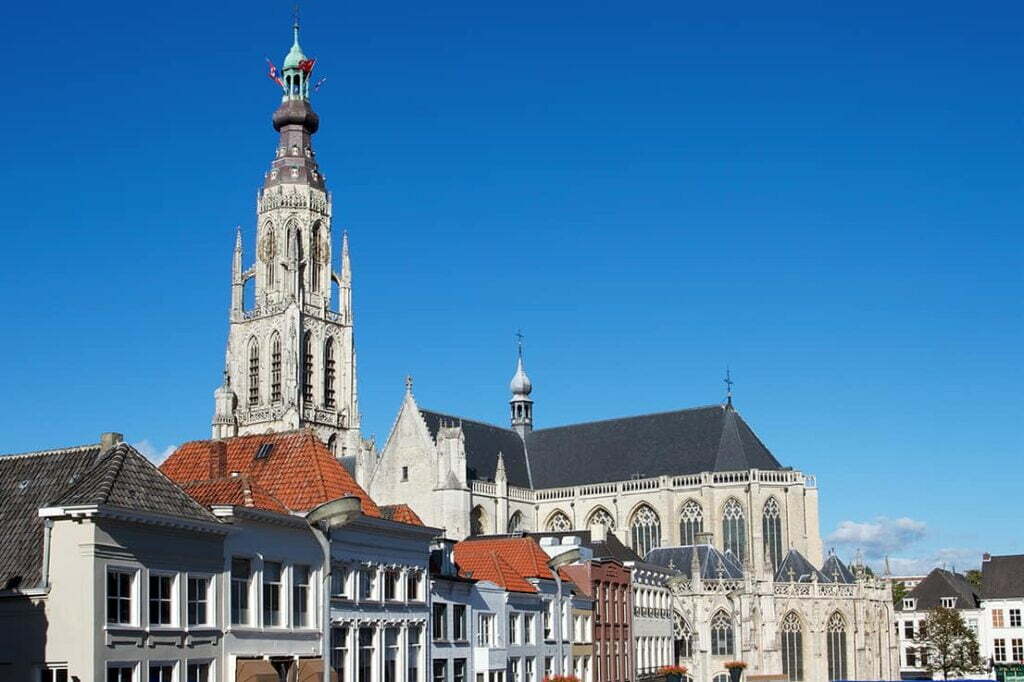
On the subject of the Nassaus, there is much to see and experience in Breda: a lot of special things remain from that era: Breda Castle, where the Nassaus resided (now Royal Military Academy), the Great Church (where no fewer than 9 Nassaus and the first Prince of Orange are buried under beautiful tombstones), the Beguinage, dozens of court houses of members of the royal household, a hunting lodge, a beautiful city park 't Valkenberg (where the Nassaus had their falcons hunted), it's almost too much to mention.
On bredanassaustad.nl you can find all kinds of things to do with Breda and the Nassaus: activities taking place in the city around the theme of Nassau; monuments built by the Nassaus, or created because of the presence of the Nassaus; you can also find all kinds of things directly or indirectly related to the Nassaus.
In short: Come to Grensland De Baronie and discover Breda Nassaustad!
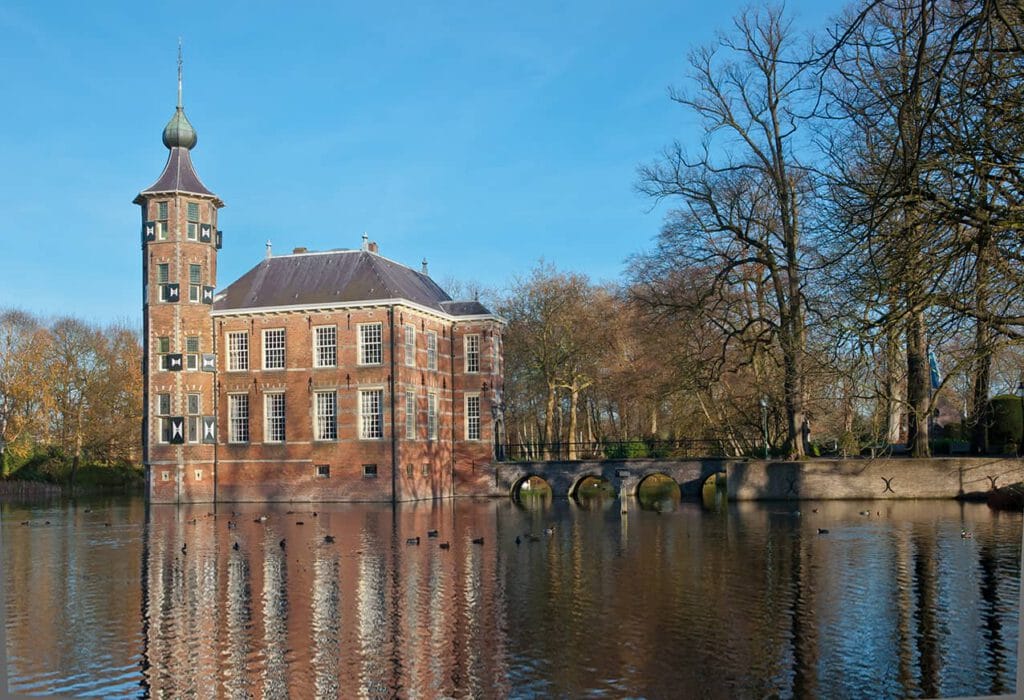
About Bouvigne Castle, it is impossible to say exactly when it was built. However, the first mention dates from 1554, the year Jacob van Brecht made his will. Jacob van Brecht belonged to one of Breda's leading families in the 16th century.
In 1614, Prince Philip William bought it to use as a hunting lodge with his brothers Maurice, Frederick Henry and William II. Bouvigne changed hands many times. After Prince William III's death, it remained the property of the Oranges until 1775.
Since 1973, Waterschap Brabantse Delta has been the proud owner of this historic country estate on the south side of Breda. The estate dates from the 15th century and consists of a fairy-tale castle surrounded by three special gardens and an orchard. In mid-2010, the water board moved into the new office building on the estate estatebouvigne.nl.
In 1403, the German count Engelbrecht I van Nassau-Dillenburg married Johanna van Polanen, the daughter of the Lord of Breda Jan III van Polanen. Through this marriage, the name 'van Nassau' not only entered the Dutch royal family, the name was also given to the Dutch territories of Baarle.
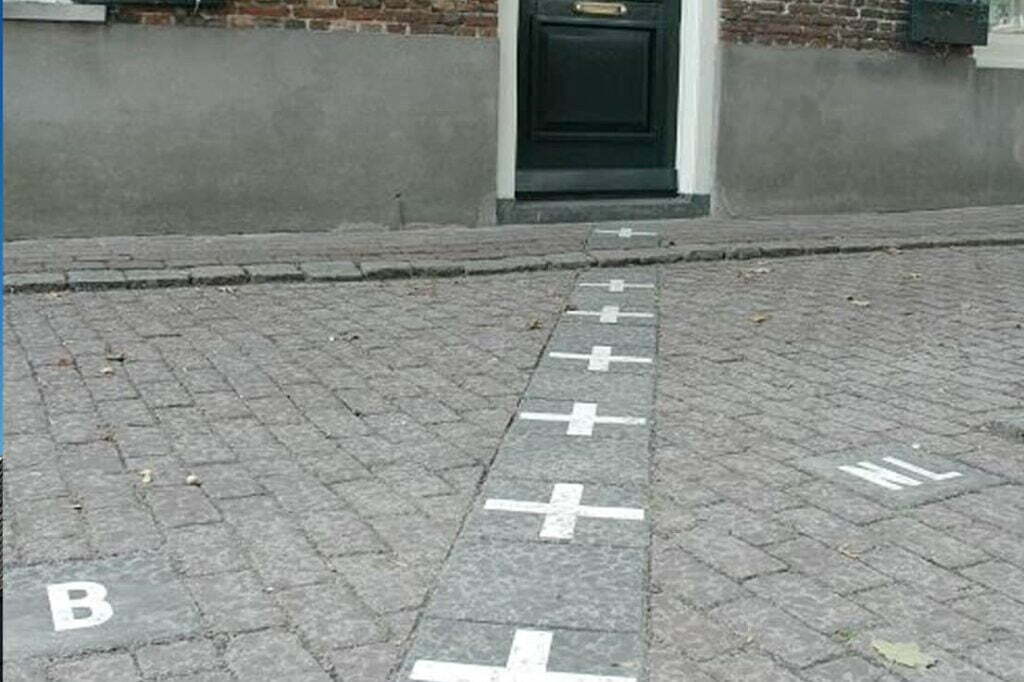
Baarle has a lively centre with plenty of cosy catering establishments and nice shops, such as a real Belgian chocolatier. The village has a Dutch part (Baarle-Nassau) and a Belgian part (Baarle-Hertog). There is a unique enclave situation here: twenty-two Belgian enclaves and eight Dutch enclaves. The border literally runs right through the village.
Special paving stones and aluminium plates in the road surface mark the enclave boundaries tourismbaarle.com/about-baarle/unique-enclave-situation.
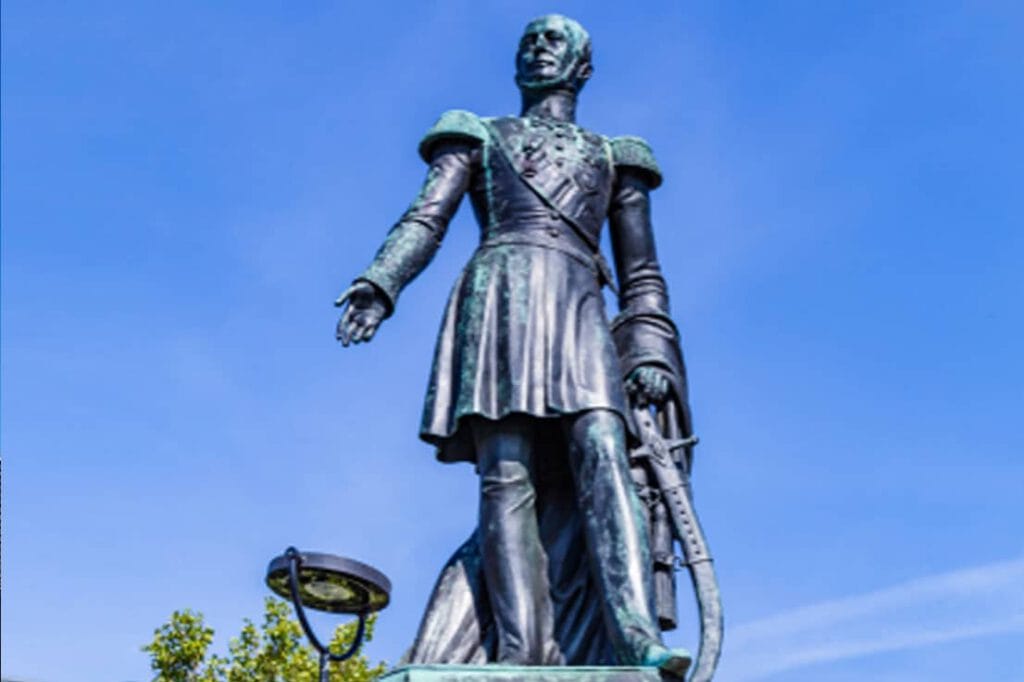
The statue on the Heuvel in Tilburg represents King Willem II. It is better known as the Tilburg Willem II monument.
On 7 October 1840, he -nearly 48 years old- ascended the throne as Willem II. The inauguration ceremony took place on 28 November 1840 in the Nieuwe Kerk in Amsterdam. This makes him to this day the oldest Dutch head of state when he took office. Under his reign, the monarch's power was already less than before.
William II loved building. In England, he had become interested in the 'Gothic revival' while studying at Oxford University. He built a large neo-Gothic building complex behind his palace on Kneuterdijk in The Hague. The palace to be built, Vaeshartelt Castle in Dutch Limburg, was never completed, and of a new palace in Tilburg, only the core was built, which is now part of the town hall. Source: Wikipedia.
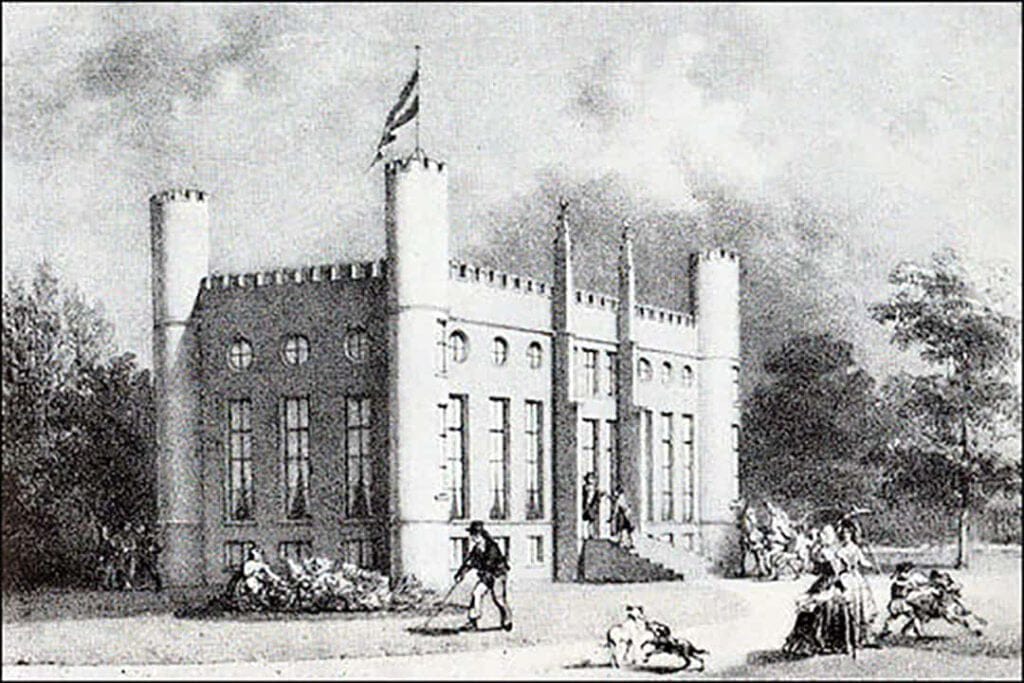
The palace was converted into the Palace-Council House (1936) of Tilburg, now part of the Tilburg town hall. Beautiful building with protected status as a national monument.
King Willem II liked to stay in Tilburg. About the place, he once remarked, "Here I breathe freely and feel happy" (also quoted as "Here I breathe frankly and freely"). On his orders, a palace was built in 1847 to serve as a country house. Today, it is located in the city centre. The king himself was never able to stay in it because he died before it was completed. He was, however, laid to rest in it after his death. The palace was handed over to the municipality by the royal family on condition that it would house a Higher Secondary School (HBS). This "Rijks HBS Koning Willem II" still exists as Koning Willem II College, though in a different building. The most famous student of this HBS is Vincent van Gogh, who attended the school in the period 1866-1868. The palace is part of the town hall. Source: Wikipedia.
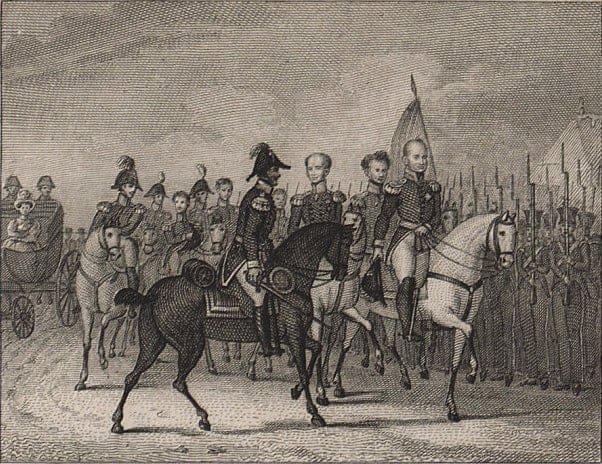
Between walking junction 40 and 23 was Camp Rijen, King William I's army camp, where some 14,000 Dutch soldiers were stationed during the Belgian Revolt (1830-1838). The tented camp was as big as the then city. After Napoleon's defeat at Waterloo (1815), the Netherlands and Belgium were merged. This created, as a northern buffer against France, the United Kingdom of the Netherlands with William I as king. Fifteen years later, the Belgians revolted, wanting to secede. William I could not agree and, from 1830, assembled some 60,000 soldiers in Brabant to invade Belgium. The main force was at the camp in Rijen. The area around the former army camp still has a military purpose; it is training ground for the army.
Behind the scenes, people are working hard to investigate whether and how this special area can be brought to life in regional and national memory. Gemeente Gilze en Rijen, archaeologist Jan Roymans, Heemkring Molenheide and the Ministry of Defence are looking into the possibilities. Message BN/DeStem dated 5 June 2020.
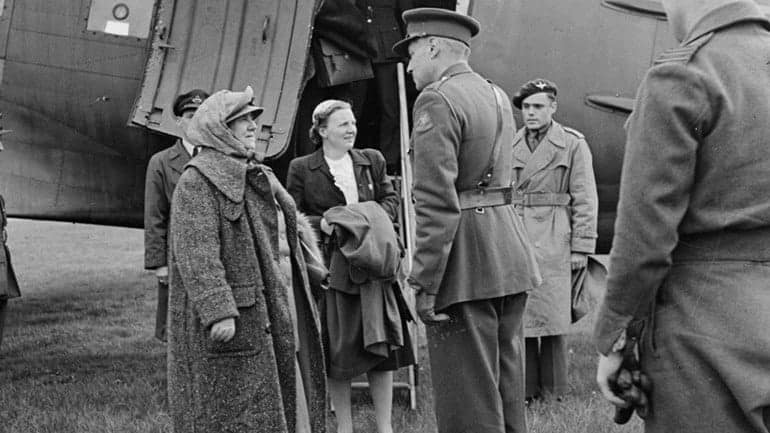
Anneville was founded in 1844 by Prosper Cuypers van Velthoven in the hamlet of Geersbroek (known locally as Gatbroek) near Ulvenhout, just south of Breda.
After the liberation of the southern Netherlands, Anneville was the residence of H.R.H. Prince Bernhard until May 1945, when he had his headquarters in Breda. After his departure, Anneville became the residence of H.M. Queen Wilhelmina for about six weeks on 3 May 1945. It was here that news of the Germans' capitulation in the Netherlands reached her. Anneville then became the scene of several large parades by, among others, the residents of Breda and its surroundings and the hamlet of Geersbroek. Its stay ended with a party for the same hamlet. During this period, the Koetshuis served as an alloy for the guard and as a garage. For this use, the rear hall was built koetshuisanneville.nl by the British in 1944.